Reverb Meaning: What Is Reverb? Definition in Music & Audio
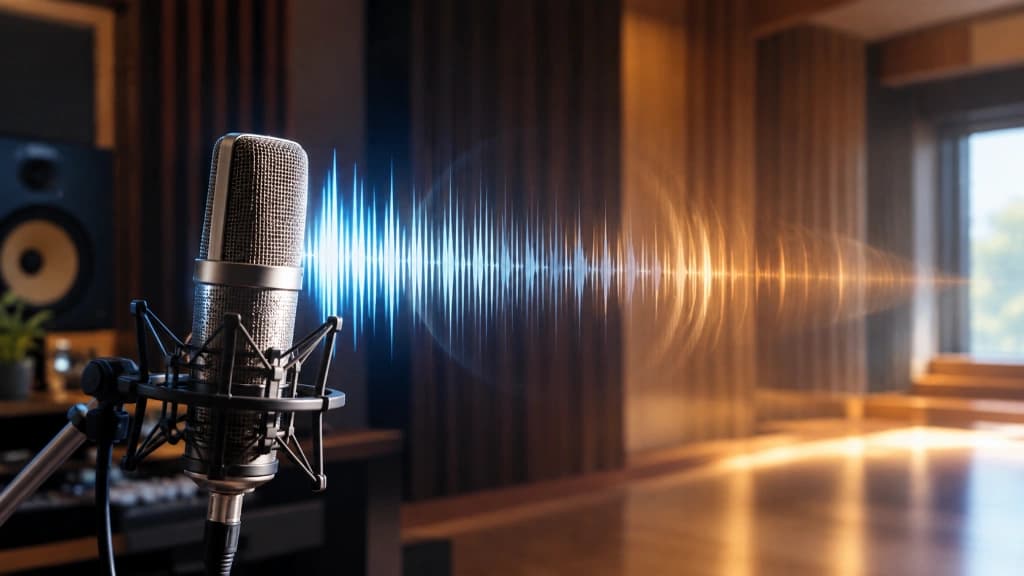
Reverb is short for reverberation, the continuation of sound caused by reflections from surfaces in a physical space. In music and audio production, reverb can be added digitally to create space, depth, atmosphere, distance, and cohesion.
In simple terms, reverb is what you hear when a sound continues and gradually fades after the original sound has stopped. A clap in an empty room, a voice in a hall, and a vocal processed with a reverb plugin can all demonstrate the effect.
What Is Reverb?
Reverb is a collection of closely spaced reflections that continue after a direct sound is produced. Sound waves bounce from walls, ceilings, floors, furniture, and other surfaces before reaching the listener. Because the reflections arrive quickly and densely, the ear hears them as a continuous decay rather than separate repetitions.
The simplest reverb definition is:
Reverb is the persistence of sound caused by multiple reflections from surrounding surfaces, creating a continuous decay after the original sound.
In music, reverb gives a dry recording the impression of a room, studio, chamber, hall, or another acoustic environment. Producers can use it realistically or exaggerate it to create a dreamy, dramatic, vintage, distant, or atmospheric sound.
How Does Reverb Work?
Reverb consists of three useful stages:
Direct Sound
The direct sound travels from the source to the listener without reflecting from another surface. It usually provides the clearest representation of the original vocal, instrument, or recording.
Early Reflections
Early reflections are the first significant reflections after the direct sound. They help communicate room size, distance, surface reflectivity, and the apparent position of the source.
Late Reflections and the Reverb Tail
As the sound continues bouncing around the environment, the reflections become denser and form the reverb tail. The tail gradually fades as surfaces and air absorb the sound. A short tail feels tight and controlled, while a long tail feels larger and more atmospheric.
The time required for reverb to decay is commonly described as reverberation time or RT60.
Reverb vs. Echo
Reverb and echo both involve reflected sound, but they are perceived differently. Reverb is a dense, blended continuation; echo is a distinct repetition with enough delay to be heard separately.
| Feature | Reverb | Echo |
|---|---|---|
| Perception | Blended continuation | Distinct repetition |
| Reflections | Closely spaced | Clearly separated |
| Main effect | Space and ambience | Repetition |
| Typical use | Vocals, instruments, environments | Creative repeats and delays |
| Example | Singing in a large hall | Shouting toward a distant surface |
A useful rule is: reverb makes a sound feel like it exists in a space; echo makes you hear the sound again.
Types of Reverb
The main types of reverb include room, hall, chamber, plate, spring, convolution, and algorithmic reverb. Some represent physical spaces, while others reproduce mechanical devices or generate reverberation digitally.
Room Reverb
Room reverb simulates a small or medium-sized space. It sounds natural and controlled, making it useful for vocals, acoustic guitar, drums, piano, percussion, and general-purpose mixes.
Hall Reverb
Hall reverb recreates the spacious character of a large concert hall. It provides a longer, more expansive decay and works well for vocals, orchestral instruments, pads, and piano. Too much hall reverb can overlap later musical phrases and reduce clarity.
Chamber Reverb
Chamber reverb is based on reflective rooms designed to create controlled reverberation. It can sound lush while retaining definition and is suitable for vocals, strings, guitars, and drums.
Plate Reverb
Plate reverb uses the vibration of a large metal plate to create a dense artificial effect. It is especially associated with vocals, snare drums, guitars, and pop production.
Spring Reverb
Spring reverb transmits sound through vibrating metal springs. Its bright, splashy, resonant, or slightly boingy character is strongly associated with electric guitar, surf music, dub, and vintage equipment.
Convolution Reverb
Convolution reverb uses impulse responses to reproduce the acoustic characteristics of a particular space or device. It can realistically simulate concert halls, churches, studios, theaters, stairwells, and other measured environments.
Algorithmic Reverb
Algorithmic reverb uses mathematical models rather than a recorded impulse response. It gives producers control over decay, room size, diffusion, damping, reflections, stereo behavior, and creative spaces that do not correspond to a physical room.
Why Is Reverb Used in Music?
Reverb can make a dry recording feel natural, place sounds in a shared environment, and shape the emotional character of a mix.
- Vocals: Short or moderate reverb adds polish and space. Pre-delay can keep the words clear while the reverb develops behind them.
- Drums: Room or plate reverb can add size and character.
- Piano: Room or hall reverb can provide depth.
- Guitar: Room, spring, or plate reverb can add atmosphere.
- Strings: Hall reverb can enhance their sense of scale.
- Synths: Long or processed reverbs can create expansive textures.
- Film, games, and podcasts: Reverb helps listeners perceive corridors, rooms, buildings, outdoor spaces, and other environments.
For spoken-word audio, subtle ambience can sound natural, but excessive reverb can reduce intelligibility.
Common Reverb Controls
Understanding a few basic parameters makes it easier to predict how a reverb effect will change a sound.
Decay Time and RT60
Decay time describes how long the reverberation takes to fade. RT60 specifically refers to the time required for the sound level to decrease by 60 decibels. Short decay creates a tighter sound; long decay creates a more sustained space.
Pre-Delay
Pre-delay is the time between the direct sound and the onset of the reverb. More pre-delay can separate the source from the reverb and help vocals or speech remain upfront.
Early Reflections
Early reflections influence how close, large, reflective, or intimate a space feels. Adjusting them can change the perceived position of the sound source.
Reverb Tail
The reverb tail is the fading portion that continues after the direct sound and early reflections. It must fit the timing of later notes, words, and phrases.
Damping
Damping controls how quickly frequencies, especially high frequencies, lose energy. More damping can create a darker, more natural decay.
Wet and Dry Signal
The dry signal is the original sound, while the wet signal contains the reverb. A higher dry level keeps the source direct; a higher wet level makes the effect more noticeable. The right balance depends on the source and intended character.
Natural and Artificial Reverb
Natural reverb comes from the physical environment around a sound source and listener. Room dimensions, surface materials, furniture, source position, and frequency absorption all affect it. Tile, concrete, glass, and stone tend to reflect more strongly than carpet, curtains, and upholstered furniture.
Artificial reverb is generated by hardware or software. It can reproduce a real space or create an imaginary one using controls such as room size, decay, pre-delay, reflections, damping, diffusion, stereo width, and modulation.
How Reverb Changes Sound
Reverb changes how listeners perceive space, depth, distance, and atmosphere without changing the original source itself.
- A short room reverb can add subtle depth.
- A large hall reverb can make a source feel farther away.
- A long, diffuse reverb can sound dreamy, dramatic, nostalgic, or cinematic.
- Shared reverb can make separate instruments feel as though they were recorded in the same environment.
A strong direct signal usually feels close and immediate. More reflected sound can make a source feel distant or surrounded by a larger space.
Can Too Much Reverb Be a Problem?
Yes. Excessive reverb can reduce clarity, obscure vocals, muddy a mix, and blur separate sounds together.
- A long tail can overlap later notes and beats, especially in fast music.
- Too much wet signal can mask consonants and make lyrics difficult to understand.
- A reverb that sounds good on an isolated vocal may become overwhelming in a full mix.
Choose decay and wet/dry balance according to the tempo, arrangement, source, and desired effect. For a ready-made browser workflow, SonicLab's Slowed & Reverb Generator lets you adjust speed, reverb, pitch, and bass on an audio file.
Reverb Examples
- Small furnished room: Reflections are reduced by carpet, curtains, and furniture, creating a short and subtle effect.
- Large concert hall: Reflections travel through a larger space and continue for longer, creating a spacious and enveloping sound.
- Dry vocal: Moderate room or plate reverb can add depth and help the vocal integrate with the instrumental.
- Dry snare: Plate reverb can make the snare feel larger and more sustained.
- Guitar: Spring reverb can create a distinctive vintage character.
- Piano: Hall reverb can make the instrument feel more open and spacious.
Frequently Asked Questions
What does reverb mean?
Reverb means reverberation: the continuation of sound created by multiple reflections after the original sound is produced.
What is reverb in audio?
Reverb is an acoustic phenomenon or audio effect created by many closely spaced reflections. It can occur naturally or be generated digitally.
What does reverb mean in music?
In music, reverb gives vocals and instruments a sense of acoustic space, depth, atmosphere, and distance.
Is reverb the same as echo?
No. Reverb blends many closely spaced reflections into a continuous decay, while echo is heard as a separate repetition.
What is an example of reverb?
A clap inside a large hall is a simple example. The direct sound is followed by reflections from the walls that gradually fade.
What does reverbed mean?
Reverbed means that reverb has been applied to a sound or recording. A heavily reverbed vocal contains a noticeable amount of reverberation.
How does reverb work?
The direct sound is followed by early reflections and then a dense reverberant tail. These reflections arrive at different times and gradually decrease in level, creating the perception of an acoustic environment.